How to Choose Grounding Sheets: A Practical Buyer’s Guide
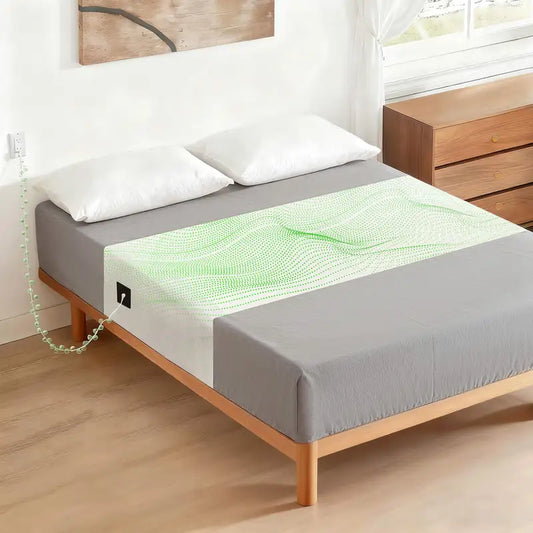
The easiest way to choose grounding sheets is to start with how you want to make your bed. Choose a fitted format if you want to replace your usual fitted sheet. Choose a half-sheet if you want to keep your existing bedding and add a smaller contact area. Then match the dimensions, setup, and washing routine to your home.
Grounding sheets, also called earthing sheets, contain conductive material and are designed for a connection to ground. Their shape matters in everyday use: a fitted sheet wraps around the mattress, while a half-sheet covers a selected area. This guide helps you choose between those formats and compare the practical details of our earthedin options.
Choose the format that suits your bed
Use the way you already arrange your bedding as your starting point.
| What you want | Start with | What determines the fit |
|---|---|---|
| Replace your usual fitted sheet and cover the full mattress surface | A fitted grounding sheet | Mattress width, length, and the depth needed to include any topper |
| Keep your usual bedding and add a smaller contact area | A grounding half-sheet | Strip dimensions, placement, enough fabric to tuck in, and contact with the exposed surface |
Our earthedin fitted sheet is the starting point for a full-surface bedding change. It uses 90% organic cotton and 10% pure silver fibers. Match its size and pocket depth to the mattress you use, including any topper.
Our earthedin half-sheet measures approximately 104.3 × 23.6 inches (265 × 60 centimeters). Its long, narrow shape gives you a strip of coverage while keeping your existing fitted sheet in place. It is designed to be tucked under the mattress, horizontally or vertically. The full length includes the fabric used for tucking; it is not all available as a contact surface on top of the bed.
For a straightforward decision, choose the fitted format for full mattress-surface coverage, or the half-sheet for a smaller, deliberately placed contact area. These are choices about your bedding arrangement.
Measure width, length, and total height
Measure the mattress itself, rather than the bed frame. Remove loose bedding and take three measurements with a tape measure:
- Width: from one side of the mattress to the other.
- Length: from the head of the mattress to the foot.
- Total height: from the bottom of the mattress to the top of any topper you plan to keep under the fitted sheet.
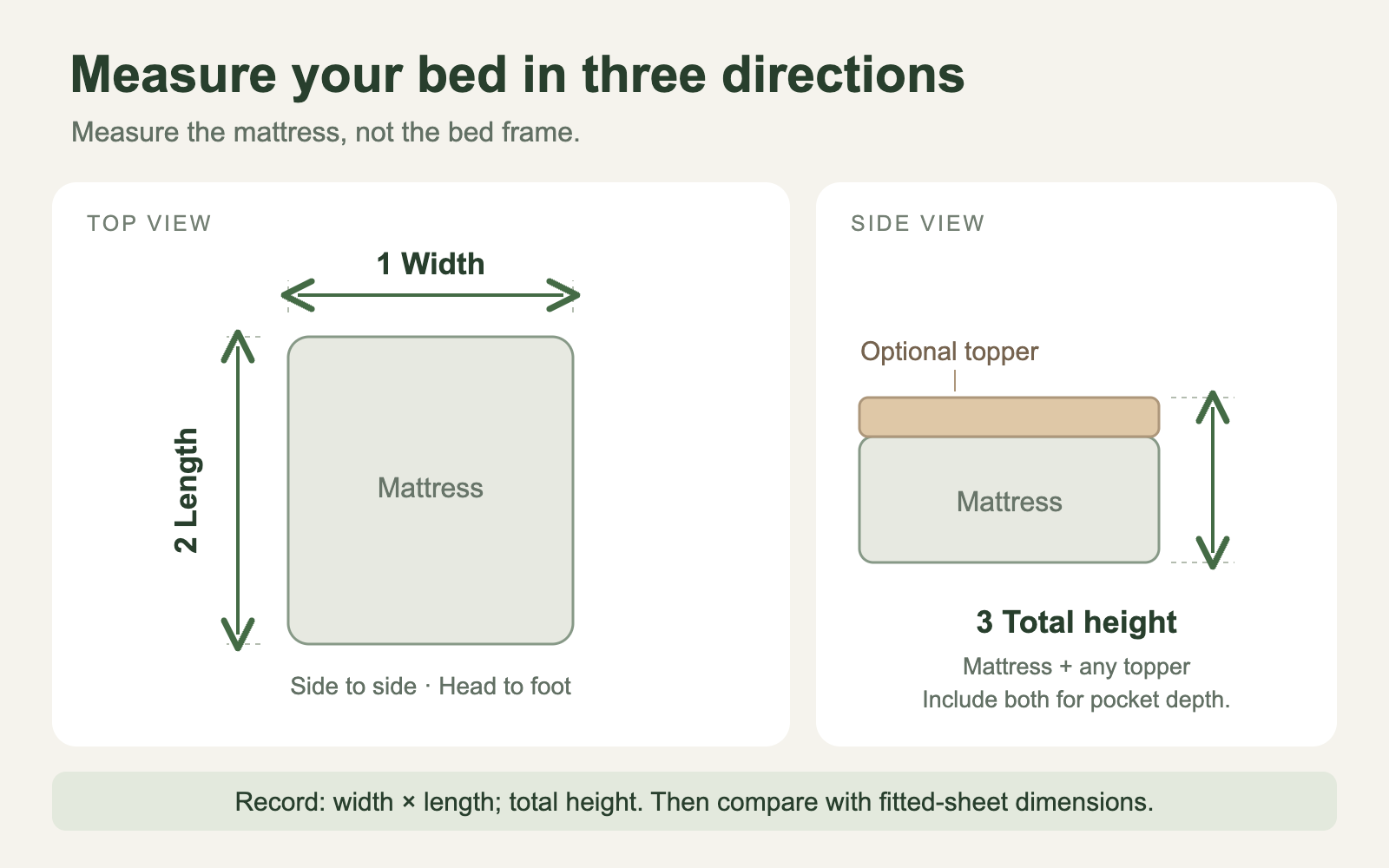
Write the measurements together, such as “width × length; total height,” so you can compare them with a fitted sheet’s dimensions and pocket depth. A matching length and width are only part of the fit: the corners also need enough depth for the mattress and topper.
For example, our Queen fitted sheet measures 60 × 80 inches with a 12-inch pocket. Compare that pocket depth with your total mattress height before choosing it. A topper adds to the height that the fitted sheet must accommodate; its thickness belongs in the same measurement.
For a half-sheet, use the tape measure to mark out the intended contact area on your bed. Consider how much fabric will run down the sides and tuck underneath. This makes the difference between the strip’s overall dimensions and its usable surface easier to picture.
Plan where the sheet will touch your skin
The earthedin half-sheet is intended for skin contact. Place it over your existing sheet with the contact area exposed, and use the tuck-under arrangement to hold it in position. Laying another ordinary sheet over that area changes the intended skin-to-sheet setup.
A fitted format suits a bed where you want the contact surface spread across the mattress. A half-sheet suits a bed where you want a defined area and prefer to keep the rest of your usual bedding. Think about where you normally lie and how you arrange your covers when choosing the strip’s position.
Both earthedin formats include a connection cord. Select the appropriate regional option and follow the supplied connection instructions, using a properly grounded outlet. If the grounding of an outlet is uncertain, have a qualified electrician check it before use. Keep the connection arrangement consistent with the product instructions.
Make sure the care routine works for you
Our current care directions for these sheets call for a warm wash at approximately 105°F (40°C), followed by low-heat tumble drying. Use a mild, neutral-pH liquid detergent. Avoid bleach, fabric softeners, oxygen-based detergents, and detergents containing added oils; do not dry clean.
That gives you a practical laundry decision before buying: whether you can use the required detergent and drying settings in your regular routine. Keep the care instructions with your laundry supplies, especially if someone else usually washes the bedding.
Follow the instructions supplied with your sheet and the current earthedin care directions. This guide focuses on our woven sheets; other surface materials need their own care instructions.
Put the health research in context
Early studies have explored sleep-related outcomes. A 2004 pilot study by Ghaly and Teplitz followed 12 people using conductive mattress pads for eight weeks and reported changes in cortisol patterns and self-reported symptoms. A 2022 placebo-controlled pilot study enrolled 22 people with mild Alzheimer’s disease; 15 completed it, and the authors reported improved sleep questionnaire scores with grounding-mat sessions.
These are examples of preliminary research, not a complete review of the field. Small samples, subjective outcomes, different study populations, and different equipment limit what they tell us about a particular retail sheet. They do not establish guaranteed results for earthedin products.
A conductivity test checks an electrical property, not sleep quality or medical effectiveness. For persistent sleep problems, seek appropriate medical care alongside attention to your sleep routine.
Include return terms in your decision
Compare the total checkout cost for your chosen format and regional option, including any shipping or additional accessories. This is the useful budget figure for the bedding arrangement you actually plan to use.
Our 90-day sleep trial and return policy allows normal use during the trial, which starts on delivery. Keep the original packaging and all included parts. For a non-defective sleep-trial return, you pay return shipping; eligible returns have no restocking fee. Contact our support team to request a return and review the full policy for conditions and exceptions.
Frequently asked questions
Which format lets me keep my current fitted sheet?
A half-sheet. Place it on top of your existing bedding, tuck it as directed, and leave the intended skin-contact area exposed. This adds a defined surface without replacing the full fitted sheet.
What should I measure if I use a mattress topper?
Measure the mattress width and length, then the combined height of the mattress and topper. Use the combined height when comparing fitted-sheet pocket depth.
Does a half-sheet cover the whole mattress?
It creates a strip of coverage. Our 104.3 × 23.6-inch half-sheet includes length for tucking, so its overall size is different from the area that lies flat on top of the bed.
Does this guide cover grounding mats too?
It focuses on woven fitted sheets and half-sheets. A mat is a separate choice with its own placement and care instructions; use guidance for the specific mat if that is the format you want.
Take the next step with your measurements
Write down your three bed measurements and decide whether you want full-surface or partial coverage. Then explore our fitted sheets for a replacement fitted layer, or our half-sheet to add a smaller contact area. For help planning the rest of your evening routine, continue with our grounding sheets and sleep hygiene guide.