Grounding Sheets vs. Grounding Mats: Which Fits Your Routine?
Choose a grounding sheet if you want a textile surface as part of your bed. Choose a grounding mat if you want a separate contact surface for a desk or seated routine. A mat designed specifically for sleeping is another option, with its own placement and cleaning instructions.
For a lasting setup at home, a fitted sheet offers broad coverage and fitted corners. For travel or a first experience with grounding bedding, a half-sheet gives you a portable textile option. You can also pair nighttime bedding with a daytime mat to increase the contact time available in your daily routine.
Grounding sheets and mats at a glance
A grounding sheet incorporates conductive material into a textile. A grounding mat provides a separate conductive surface; many wipe-clean models use a carbon-based coating or surface. Construction varies, so a textile sheet, a desk mat, and a sleep mat should not automatically share the same care instructions.
| Decision | Fitted grounding sheet | Grounding half-sheet | Grounding mat |
|---|---|---|---|
| Where it fits | Replaces the fitted sheet on your mattress | Adds a strip across existing bedding | Desk, seated area, or bed, depending on the model |
| Contact area | Larger available skin-contact surface as you turn | Selected area, such as beneath bare calves or feet | The area where bare feet or hands rest |
| Staying in place | Fitted corners wrap around the mattress | Tuck the strip and secure it with suitable sheet clips | Place it in the intended sitting or working area |
| Fit to compare | Mattress width, length, and depth | Strip dimensions, placement, and tuck allowance | Usable surface and intended location |
| Cleaning | Laundering to the textile's instructions | Laundering to the textile's instructions | Often wipe-clean; confirm the exact model |
| Best starting point | Ongoing home use and an overnight bedding routine | Travel, a first experience, or keeping your current fitted sheet | Daytime work or seated relaxation; bed use requires a suitable model |

Choose a sheet for a bedding routine
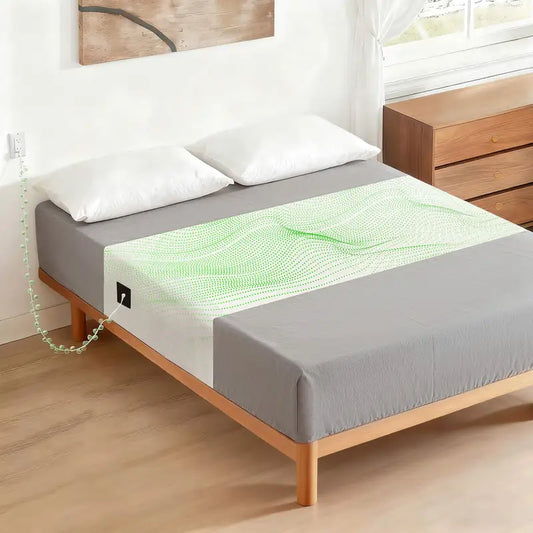
For ongoing home use, our earthedin fitted grounding sheet combines a broad contact surface with fitted corners that hold it around the mattress. The larger surface gives bare skin more room to stay in contact as you turn during sleep. This makes it a practical choice for a stable, everyday bed setup. Match the dimensions and pocket depth to your mattress, including any topper beneath the sheet.
For travel or a first experience with grounding bedding, our grounding half-sheet is a portable strip that lets you keep your current fitted sheet. It measures approximately 104.3 by 23.6 inches. Lay it over your bedding where bare skin can touch it, tuck the extra length, and use suitable bed-sheet clips to hold it securely. Pack the clips with the sheet and cord when traveling; check the grounding connection at your destination before use.
Both earthedin textile formats are made from 90% organic cotton and 10% conductive silver fiber and are designed for comfortable overnight use. Choose the fitted sheet when you want a secure home setup; choose the half-sheet when portability and an easy introduction matter more. Our grounding sheet size guide explains mattress measurements and tuck allowance.
Use a mat by day and bedding by night
A grounding mat suits daytime activities such as working at a desk, reading, or relaxing in a chair. Our earthedin grounding mat measures approximately 23.6 by 15.7 inches. Place it under your bare feet while seated or use it with your hands on a work surface. Choose a position that fits your normal posture and leaves a sensible route for the cord.

The two routines can complement each other: use a mat during part of your working or relaxation time, then use a fitted sheet or half-sheet at night. Combining those separate periods can increase your total daily grounding contact time. There is no need to hold an awkward posture or rearrange your whole day; choose periods when you are already sitting or sleeping.
For a mat specifically intended for overnight use, check its own fastening, orientation, and permitted covering layers. Sleep mats remain a separate option; a desk or seated-use mat should not automatically be treated as a bed mat.
Plan the contact before choosing the coverage
For earthedin sheets, plan for some bare skin to touch the conductive textile. Pajamas can remain part of your routine if an exposed area still touches the sheet. Put a mattress protector or topper beneath the grounding sheet, keeping the intended contact surface accessible.
For a half-sheet, choose a position that remains accessible after you arrange your duvet and other bedding. A strip under bare calves or feet is a different layout from a fitted sheet that covers the mattress. Think about where you rest and turn, not simply how large the product looks in a photograph.
With a mat, use its specified conductive side and follow its rules for skin contact, socks, and covering layers. Those instructions differ among products. A covering allowed for one sleep mat is not automatically suitable for a silver-fiber sheet. Our setup and connection guide covers the earthedin bedding arrangement.
Compare the cleaning routine you will maintain
For current earthedin fitted sheets and half-sheets, disconnect the grounding cord before washing. Use a regular warm wash at about 105°F (40°C), mild neutral-pH liquid detergent, and gentle low-heat tumble drying. Avoid bleach, whitening or oxygen-bleach products, fabric softener, and oil-containing detergents. The full earthedin washing guide explains the sequence.
For the earthedin mat, disconnect the cord and wipe the surface with a soft cloth and water or mild soap. Remove soap residue with a clean damp cloth and let it dry before reconnecting. Do not submerge it; avoid bleach, alcohol, and harsh cleaners. A wipe-clean daytime surface and washable nighttime bedding have different care routines, so keep each product's instructions with it.
Compare the complete setup before the price
For either format, identify the supplied cord, connection method, regional compatibility, and any separately required checking equipment. A familiar-looking plug is not confirmation that an outlet has a working ground. Use the intended accessories and follow the product's grounding-check instructions; have uncertain household wiring assessed by a qualified electrician.
Include necessary accessories and any return shipping costs when comparing the total purchase. Read the applicable return conditions before using or washing a product. This gives you a more useful budget than comparing a full fitted sheet with a small desk mat on sticker price alone. Start with the location you use most, then add a complementary daytime or nighttime format if it fits your routine.
Keep health expectations separate from format
Early grounding research includes small pilot studies. For example, a 2004 study by Ghaly and Teplitz followed 12 people for eight weeks using a conductive mattress pad and reported changes in cortisol patterns and subjective symptoms. The small sample, self-reported outcomes, and specific tested setup limit what it tells us about current retail products. It was not a comparison of earthedin sheets with desk mats, and it is only one part of the research field.
A conductivity check addresses an electrical property, not sleep or medical effectiveness. More surface area or longer contact does not establish that one format will deliver better health results. Make this choice around fit, contact, and upkeep rather than a guaranteed outcome.
Frequently asked questions
Is a grounding half-sheet the same as a grounding mat?
No. The earthedin half-sheet is a cotton-and-silver textile strip that is laundered according to its care instructions. A mat may use a coated surface with a different cleaning method. A similar rectangular outline does not make the construction or care interchangeable.
Can I put a grounding mat on my bed?
Choose a model whose instructions specifically allow bed use. Check its fastening, conductive side, and permitted bedding layers. A mat intended only for a desk should not be assumed suitable for overnight use.
Do I need both a grounding sheet and a mat?
You can start with one. Using a mat while working or relaxing and a sheet during sleep gives you additional daily contact periods. The combination is useful when you want both daytime and nighttime use and can maintain each product's setup and care routine.
Which format requires less cleaning?
A wipe-clean mat avoids a laundry cycle, but still needs surface care. A textile sheet needs laundering. Compare the actual cleaning steps and your household routine rather than assuming that one format never needs attention.
Choose your first everyday setting
For a secure home bed setup with a larger available skin-contact surface, choose our fitted grounding sheets. For travel or a first experience, choose a grounding half-sheet and plan suitable sheet clips. To add daytime contact while working or relaxing, explore our grounding mat. You can use daytime and nighttime formats together around the routines you already have.